Cognitive Immunity Is Not Obsession
Table of Contents
Table of Contents
by Richard P. Weigand
There is a danger in studying deception too long.
At first, the work feels necessary. You begin to see how language is manipulated, how institutions drift, how media frames reality, and how bad actors hide behind respectable language. The world sharpens. You notice more, and you become harder to fool.
That is good, up to a point.
But a man can become so immersed in detecting corruption that corruption begins to look like the whole world. He sees bad faith in every disagreement, hidden motive behind every public face, and manipulation in every institution. He tells himself he is simply being realistic, but something in him begins to change.
He is no longer merely seeing evil. He is beginning to live inside it.
When Vigilance Alters Perception
I fought evil for a long time. I know there are men who intend harm, and some will justify it as serving a greater good. So this is not naïveté speaking. Evil is real.
But vigilance becomes distortion when we begin supplying evil where it has not been established.
I learned that when a person does not know another’s intent, he often imagines the worst. Someone fails to arrive when expected. At first, we assume he was delayed. Then we wonder whether something happened. After a little longer, the thought changes: How inconsiderate. How rude.
Nothing new has been learned, yet his bad intent now appears obvious.
The moment we accept that conclusion, we stop moving toward resolution and begin preparing for battle. If the judgment is false, then a lie has entered the situation, and the real problem becomes harder to solve.
Vigilance has stopped protecting perception.
It has begun altering it.
A Suspicion That Nearly Ended the Work
I learned this lesson in a setting where suspicion came easily. Working with another person, I helped persuade a senior justice official in a foreign country to adopt a program aimed at a powerful criminal organization. The program worked, and the organization was brought down.
Then the program abruptly stopped.
The explanation circulating among those involved was that the official had been bought off by a rival organization. In that world, the conclusion made sense. Corruption was real, the stakes were high, and the timing looked suspicious.
But we did not accept the explanation without asking.
The official gave us a reason we had not seen. Once the obstacle was understood and resolved, the program resumed, and another criminal organization was brought down.
Had we accepted the darker story, we would have treated an ally as an enemy and abandoned work that was still capable of doing good. The suspicion sounded intelligent because it fit the environment.
It was also wrong.
The Difference Between Seeing and Dwelling
Many serious people make this error because they know that denying corruption is foolish. They conclude that constant attention to it must therefore be wisdom.
It is not.
There is a difference between recognizing danger and making a home inside it. The purpose of studying propaganda is not to dwell in lies, but to remain free of them. The purpose of exposing corruption is not to let corruption colonize the inner life, but to recognize the trap, make sound decisions, and continue toward what is good.
Cognitive immunity is not permanent suspicion. It is the ability to see clearly enough that one is not ruled by what one sees.
The Proportion of Good and Evil
A healthy immune system does not attack everything in sight. It distinguishes what belongs from what does not and responds in proportion to the threat. If it reacts too little, the body is left unprotected. If it attacks too much, it creates damage of its own.
The mind can do the same.
Too little discernment leaves a person open to manipulation. Too much fixation makes suspicion replace observation. In both cases, freedom is lost.
More people are decent than destructive. In an ordinary life, there may be only a few genuine sources of continuing harm. When nearly everyone begins to look malicious, corrupt, or dangerous, the proportion itself should be questioned.
That does not prove that no threat exists. It suggests that the mind may be granting evil more territory than reality does, or one needs to recognize the need for a life style change!
A person who sees corruption everywhere is not necessarily wise.
He may simply be saturated.
The Discipline of Not Knowing
Attention shapes the inner world. If all we study is decay, decay begins to feel like the deepest truth about life. If all we study is manipulation, ordinary failure begins to look conspiratorial. If all we prepare for is attack, uncertainty begins to feel like threat.
The point is not to become soft. It is to remain accurate.
That requires the ability to say:
I do not yet know.
The mind dislikes uncertainty and rushes to fill the gap. Often it chooses the darkest explanation because darkness feels serious and protective. But a grim conclusion is not automatically a wise one.
“I do not yet know” prevents suspicion from hardening into false certainty. It keeps misunderstanding from becoming conflict and stops imagination from poisoning the field before the facts arrive.
Remembering the Purpose
Why learn to recognize propaganda?
So we may think clearly.
Why understand corruption?
So we may live honestly.
Why study manipulation?
So we may remain free enough to build what is worth building.
The purpose is not exposure for its own sake. The purpose is right living.
That may mean surrounding ourselves with decent people, pursuing worthy work, protecting our attention, and refusing to let every public madness occupy the mind. It may mean knowing that evil exists without drinking from every poisoned stream.
That is not escapism.
It is sanity.
A person who never looks at darkness will be unprepared. A person who never looks away from it will be consumed. The task is to learn the right proportion of attention.
See clearly enough to recognize danger. Judge carefully enough not to invent it. Do not assign evil where intent is unknown, and do not let the study of corruption corrupt your own sight.
The point of cognitive immunity is not merely to survive deception.
It is to remain free enough to live well.
Related Reading
Proportion: The Unseen Governor of Life
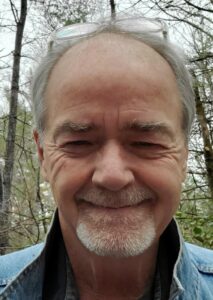
Richard P. Weigand writes on first principles, ethics, formation, logic, media, and cognitive immunity. His work explores how people think, how character is formed, and how modern systems shape belief and behavior. Explore more on the About and Books pages.
(C)Copyright 2026 All Right’s Reserved Richard P Weigand