What Is Truth — Beyond the Thought
The Article
Truth is usually presented as something we arrive at.
We gather evidence.
We compare arguments.
We weigh competing claims.
From this, we say something is true.
This is the level most discussions remain on.
It is the level of reasoning—facts, logic, and conclusion.
Thinkers like Sam Harris argue that truth can be approached through careful thought and shared standards of evidence.
There is value in that.
But it begins after a more fundamental question has already been decided.
Truth Does Not Begin with Evidence
Before evidence is evaluated, something else is in place.
A framework exists that determines:
- what counts as evidence
- what sources are considered valid
- what conclusions are even possible
These are rarely examined.
They are accepted.
And once accepted, they quietly guide what will be recognized as true.
The Structure Beneath Truth
At a deeper level, truth depends on three prior conditions:
- Authority — Who has the right to define what is true
- Agreement — What a group accepts as reality
- Language — The words used to describe and interpret the world
These shape the field in which truth is pursued.
If they shift, what is called truth can shift with them.
Not because reality has changed,
but because the structure used to interpret it has changed.
Truth as Recognition, Not Construction
We often speak as if truth is something we build.
But at a first-principles level, truth is something that must be recognized, not created.
It exists independent of agreement.
Independent of authority.
Independent of whether it is accepted at all.
The difficulty is not in creating truth,
but in seeing it clearly through the structures that surround it.
What Is Rarely Seen
Most people ask:
“Is this true?”
A more fundamental question is:
“Why do I recognize this as true—or not?”
That question leads beneath the conclusion
to the assumptions that made the conclusion possible.
Where Truth Is Shaped
Truth, in practice, is often shaped before it is debated.
It is shaped by:
- what is taught as foundational
- what is repeated until familiar
- what is permitted to be questioned—and what is not
In this environment, disagreement can occur
without ever reaching the deeper level.
Because the starting points remain the same.
The Boundary of Thought
Every system of thought has boundaries.
Within those boundaries, truth can be explored, refined, debated.
But the boundaries themselves are rarely examined.
They define:
- what can be considered
- what is dismissed
- what is never seen
To move beyond the thought is to examine those boundaries.
Why This Matters
If truth is understood only as evidence and argument,
then the solution is better reasoning.
If truth is understood at the level of structure,
then the task changes.
The question becomes:
- Who defines the framework in which truth is pursued?
- What assumptions are treated as unquestionable?
- What remains outside the field of view?
Beyond the Thought
To go beyond truth as it is commonly discussed
is to move beneath agreement and argument.
It is to see that what is called truth
often depends on the structure that precedes it.
And that structure, once seen,
can either clarify reality—or obscure it.
Closing
Truth is not determined by consensus.
It is not secured by authority.
It is not created by argument.
It is either seen, or it is not.
And what determines that
lies deeper than the thought itself.
Related Reading:
- What Is Authority — Really?
- The Illusion of Consensus
- What Is Influence — Beyond the Thought
- Propaganda: The Redefinition of Words (future link)
- First Principle TOC
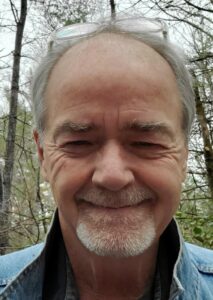
Richard P. Weigand writes on first principles, ethics, formation, logic, media, and cognitive immunity. His work explores how people think, how character is formed, and how modern systems shape belief and behavior. Explore more on the About and Books pages.
(C)Copyright 2026 All Right’s Reserved Richard P Weigand