The Burden of Seeing: Why Truth Creates Responsibility
Table of Contents
Table of Contents
The Burden of Seeing
Seeing is not as simple as opening the eyes.
A person can look at something for years and still not see it. He can live beside a problem, work inside a failing system, hear the same excuse, watch the same pattern, and still never fully recognize what is in front of him.
Then one day, something changes.
A word lands differently.
A pattern becomes visible.
An excuse loses its power.
A contradiction can no longer be hidden.
The thing that was only sensed becomes clear.
That moment is not merely informational.
It is moral.
To see clearly is to cross a line. Before that moment, a person may claim confusion, uncertainty, innocence, or lack of awareness. After that moment, something has changed. He may still refuse to act, but he can no longer honestly say he did not see.
That is the burden of seeing.
Seeing Is Not the Same as Noticing
Noticing is casual.
Seeing is deeper.
A person may notice that a friend drinks too much. He may notice that a child has grown quiet. He may notice that an institution keeps failing in the same direction. He may notice that a story does not add up.
But noticing can remain light.
It can pass through the mind without taking hold.
Seeing happens when the mind stops moving past the fact and allows it to stand there. It says, “This is not random. This is not nothing. This means something.”
That is when responsibility begins to form.
The mind knows that seeing will not let it remain untouched.
The End of Comfortable Innocence
There is a comfort in not knowing.
A person who does not know can remain innocent in his own mind. He can say he was unaware. He can say no one told him. He can say the matter was unclear.
But once he sees, innocence changes.
This does not mean he instantly knows what to do. It does not mean every answer is obvious. It does not mean he must act recklessly or speak before wisdom has done its work.
But it does mean the old innocence is gone.
He now stands in relation to the truth.
He has to carry it.
This is why people sometimes feel grief after recognition. They are not only grieving what they now see. They are grieving the loss of the person they were before they saw it.
Why People Look Away
People often look away because they sense the cost of seeing before they admit the truth itself.
They know that if they see the problem clearly, they may have to change a relationship. They may have to confront a friend. They may have to leave a group. They may have to apologize. They may have to stop repeating a comfortable explanation.
They may have to admit, “I knew more than I said.”
That is a hard sentence.
So the mind learns to glance and move on.
It becomes skilled at partial seeing. It allows enough awareness to feel intelligent, but not enough to become responsible. It notices just enough to discuss the problem, but not enough to answer it.
This is how people protect themselves from truth.
They do not always deny it.
They simply refuse to let it become clear.
The Crowd Makes Not-Seeing Easier
The burden of seeing is lighter when no one else sees.
Or at least, when everyone pretends not to.
A crowd can create permission not to notice. If everyone walks around the problem, the individual begins to doubt whether the problem is really there. If everyone repeats the same explanation, he may silence the question forming in his own mind.
The crowd gives him cover.
He can say, “If this were truly wrong, others would say so.”
But this is how many falsehoods survive.
Not because no one sees them.
Because everyone waits for someone else to admit what is visible.
The crowd can become a shelter for cowardice while calling itself consensus.
The Tortoise and the Burden
The hare runs past what would slow him down.
The tortoise sees because he pauses.
That pause is costly. It separates him from the speed of the group. It may make him look foolish, old-fashioned, hesitant, or difficult. Others may ask why he is still examining what everyone else has already accepted.
But the tortoise understands something the hare forgets.
Speed can protect a person from recognition.
If he keeps moving, he does not have to see. If he keeps reacting, he does not have to think. If he keeps pace with the crowd, he does not have to answer the quiet sense that something is wrong.
The tortoise bears the burden of seeing because he refuses to be hurried away from reality.
Seeing Requires Judgment
The burden of seeing does not mean every recognition should become immediate action.
That is important.
Some people see a truth and rush forward without wisdom. They speak too soon, accuse too broadly, act without preparation, or confuse clarity with permission to become harsh.
Seeing must be joined to judgment.
What exactly did I see?
How certain am I?
What evidence supports it?
What is mine to do?
What is not mine to do?
What would correction require?
What timing is wise?
What harm might come from silence?
What harm might come from careless action?
These questions do not cancel responsibility.
They discipline it.
The person who sees clearly must also learn to act rightly.
The Temptation to Explain It Away
Once a person sees, the mind may immediately try to rescue him from the burden.
It offers explanations.
Maybe it is not so bad.
Maybe I misunderstood.
Maybe someone else will handle it.
Maybe it is not my place.
Maybe this is just how things are.
Maybe saying something would make it worse.
Sometimes these are valid cautions.
Often, they are escape routes.
The mind knows that recognition creates obligation, so it begins negotiating with the truth. It tries to reduce the burden by making the thing smaller, vaguer, less certain, or less immediate.
This is where rationalization does its quiet work.
It does not erase the truth.
It dims it.
The Weight of Naming
To name a thing is to make it harder to ignore.
This is why honest language matters.
A problem unnamed can float in the background. It can remain a mood, a discomfort, a suspicion, a recurring tension. But once the right word arrives, the whole condition changes.
“That is manipulation.”
“That is neglect.”
“That is cowardice.”
“That is fraud.”
“That is not compassion. That is fear.”
“That is not education. That is conditioning.”
The right word does not create the reality.
It reveals it.
And once revealed, the thing now stands before the mind as something to be answered.
This is why corrupted language is so useful to avoidance. If the wrong word can be kept in place, the burden of seeing can be delayed.
Seeing and Conscience
Conscience is not merely a feeling.
It is the inner place where truth presses upon responsibility.
When a person sees clearly, conscience begins to speak. It may not shout. It may not give a full plan. It may simply refuse to let the person rest in the old explanation.
This is one reason people become restless after recognition.
They are no longer only thinking about the thing.
They are being addressed by it.
The seen thing now asks something of them.
It may ask for honesty.
It may ask for patience.
It may ask for courage.
It may ask for correction.
It may ask for confession.
It may ask for refusal.
It may ask for a slower, steadier loyalty to reality.
The burden of seeing is not only that one knows.
It is that one is now called.
The False Peace of Avoidance
Avoidance often feels peaceful.
No confrontation.
No disruption.
No cost.
No difficult conversation.
No rearrangement of life.
But this peace is fragile.
It depends on keeping the truth at a distance. It requires continued blindness. It asks the person to keep walking around the same thing without naming it.
Over time, this false peace becomes expensive.
Families pay for it. Institutions pay for it. Cultures pay for it. The individual pays for it in the quiet loss of self-respect.
Because somewhere inside, he knows.
He knows he saw enough.
He knows he stepped around it.
He knows he called avoidance wisdom.
That knowledge does not disappear.
It settles.
The Mercy Within the Burden
The burden of seeing is heavy.
But it is also merciful.
That may seem strange. Seeing can hurt. It can disturb comfort. It can end illusions. It can require difficult decisions.
But seeing also gives a person a way back to reality.
A person cannot repair what he refuses to see. He cannot correct what he will not name. He cannot become free while defending the fog that keeps him captive.
The burden is real.
But so is the gift.
Once a thing is seen, the person is no longer wholly lost inside it. He may not know the whole path forward, but he knows where the path begins.
It begins where denial ends.
Enough People Who Can See
The world does not need everyone to see everything at once.
That is not how repair usually begins.
Repair often begins with a minority. A few people stop running with the crowd. A few people pause. A few people trust the quiet sense that something does not match. A few people refuse to keep calling confusion wisdom.
They do not need to be loud.
They need to be grounded.
They need to see and remain faithful to what they have seen.
This is how falsehood begins to lose power. Not all at once. Not everywhere. But wherever reality is named and responsibility is accepted, the fog thins.
The hare may still run.
But the tortoise has found the ground.
Carry What You See
The burden of seeing is the burden of adulthood.
It is the movement from innocence to responsibility, from reaction to judgment, from speed to sight, from crowd-thinking to conscience.
It does not make a person perfect.
It does not make him certain about everything.
It does not give him permission to become proud, harsh, or reckless.
But it does require him to become honest.
To see clearly and then pretend not to see is one of the ways a person loses himself.
To see clearly and carry the burden with patience, courage, and humility is one of the ways he becomes free.
The truth does not always ask us to fix everything.
But it does ask us to stop pretending not to know.
And sometimes, that is where the whole repair begins.
Related Reading:
- The Mercy of Not Looking
- What Is Truth?
- The Difference Between Reason and Rationalization
- Why People Avoid the Truth They Already See
- Cognitive Immunity: Learning to Recognize Manipulation
- The Redefinition of Words: How Language Loses Reality
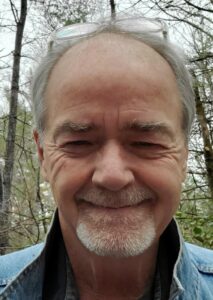
Richard P. Weigand writes on first principles, ethics, formation, logic, media, and cognitive immunity. His work explores how people think, how character is formed, and how modern systems shape belief and behavior. Explore more on the About and Books pages.
(C)Copyright 2026 All Right’s Reserved Richard P Weigand