Why People Avoid the Truth They Already See: How the Mind Escapes Recognition
Table of Contents
Table of Contents
Absolutely. Next in the sequence:
Why People Avoid the Truth They Already See
Subtitle
How the Mind Escapes Recognition
Intro sentence
People often know more than they admit. The problem is not always blindness. Sometimes the problem is what seeing would require.
Why People Avoid the Truth They Already See
People often know more than they say.
They may not know it fully. They may not have the words for it yet. They may not have gathered all the facts, sorted every detail, or reached final certainty.
But somewhere beneath the explanations, they know enough to hesitate.
They sense the relationship is wrong.
They sense the institution is lying.
They sense the excuse no longer works.
They sense the pattern has repeated too many times.
They sense the words do not match the world.
And yet they continue.
This is one of the strange conditions of human life. People can stand very close to truth and still avoid recognizing it. They can see the outline of a thing while refusing to name it. They can feel the burden of recognition before they allow themselves to admit what they have seen.
The issue is not always ignorance.
Sometimes the issue is avoidance.
The Mind Knows When a Door Will Open
Truth often announces itself before it is accepted.
A person may feel it as unease. A pause. A small tightening in the mind. Something does not fit. Something does not sound right. Something in the story has too many polished edges.
This inner signal is easy to dismiss.
The group moves on. The expert explains. The institution reassures. The family changes the subject. The friend laughs it off. The media gives the approved interpretation.
So the person lets it pass.
But the signal was not nothing.
It was the mind noticing a door.
And the person may know, without saying so, that if he opens that door, more doors will follow.
One truth may lead to another. One admission may require another. One clear look may disturb years of comfortable arrangement.
So he does not open the door.
He stands outside it and calls the matter complicated.
Recognition Is Not Mere Information
Information can remain distant.
Recognition cannot.
A person can hear facts all day and remain unchanged. He can listen to statistics, arguments, reports, warnings, and testimonies without letting them enter the place where decisions are made.
Recognition is different.
Recognition happens when the truth becomes personally unavoidable.
It is the moment a person says, even if only silently, “I see it now.”
That moment carries force.
Before recognition, a person can say he did not know. After recognition, innocence changes. The person may still refuse to act. He may still explain the matter away. He may still choose comfort, loyalty, or silence.
But he cannot honestly claim the old ignorance.
This is why recognition is often resisted more strongly than information.
Information can be collected.
Recognition must be answered.
The Fear of What Comes Next
People do not always fear truth itself.
They fear what truth will ask of them.
If I admit this is true, what must I do?
What must I stop doing?
Whom must I disappoint?
What must I give up?
What relationship will change?
What group will reject me?
What old decision will I have to judge differently?
What part of my life will no longer make sense?
These are not small questions.
Truth may require courage, but courage is costly. It may require a person to lose approval. It may require him to admit he was wrong. It may require him to change habits, confront people, leave a group, repair damage, or start over.
So the mind searches for another route.
It asks whether the truth is really true.
Then it asks whether it really matters.
Then it asks whether anything can be done.
Then it asks whether now is the right time.
By the end, the person has not rejected truth directly.
He has postponed it until it no longer feels urgent.
The Comfort of the Crowd
The crowd offers powerful protection against recognition.
If everyone else seems calm, perhaps nothing is wrong. If everyone else repeats the same explanation, perhaps the explanation is true. If everyone else has moved on, perhaps the matter was never worth examining.
This is how people borrow blindness from one another.
A single person may doubt himself. A group can remove that doubt by refusing to look together.
The family agrees not to mention the pattern.
The company agrees not to question the numbers.
The institution agrees not to examine the failure.
The culture agrees to repeat the approved words.
No one has to be fully convinced. They only have to keep pace.
The hare lives by this pace.
He runs because everyone else is running. He speaks because everyone else is speaking. He agrees before he has looked. He mistakes motion for thought and speed for wisdom.
But truth often requires the opposite.
It asks a person to pause.
To become the tortoise.
To slow down enough to see what the crowd is stepping over.
Rationalization as Self-Protection
When people already see more than they admit, rationalization becomes useful.
It gives them a place to hide without feeling dishonest.
They can say:
“It is not that simple.”
“Good people disagree.”
“There are bigger problems.”
“That is just how things work.”
“You have to understand the context.”
“We should not judge.”
“Maybe I am overreacting.”
Again, some of these statements can be true. Life is not always simple. Good people do disagree. Context matters. Judgment can be rash.
But rationalization does not use these ideas to find truth.
It uses them to avoid the claim truth makes.
The goal is not clarity.
The goal is relief.
That is how a person can feel thoughtful while moving away from what he knows.
The Role of Language
Language can either reveal truth or protect us from it.
When words are honest, they bring reality closer. They name what is happening. They make the pattern visible. They allow people to think, speak, correct, and act.
But dishonest language creates distance.
A lie becomes a narrative.
A failure becomes a challenge.
Manipulation becomes guidance.
Cowardice becomes compassion.
Control becomes safety.
Surrender becomes tolerance.
Once the language softens the truth, the conscience can relax.
The person no longer has to face the thing directly. He can respond to the approved label instead of the actual condition.
This is why redefinition is so powerful.
Change the word, and you may delay recognition.
Delay recognition, and you delay responsibility.
The Pain of Admitting You Knew
One reason people avoid truth is that recognizing it may also require admitting they knew sooner.
That is a painful admission.
A person may have ignored signs for years. He may have defended someone who was harming others. He may have participated in a system he now sees clearly. He may have repeated claims he never examined. He may have mocked people who were telling the truth too early.
To admit the truth now may require more than correction.
It may require repentance.
That word may sound too religious for some settings, but the reality is human. To see truth after long avoidance often produces grief. The person must face not only the truth itself, but also the time spent avoiding it.
So the mind delays.
Not because the truth is invisible.
Because the cost of honesty grows with time.
Why the Obvious Becomes Unspeakable
The most dangerous truths are often the ones everyone quietly knows.
These truths become socially protected. People learn where not to look. They learn which questions end careers, strain families, disturb friendships, or break group loyalty.
Soon, the obvious becomes unspeakable.
Not because it lacks evidence.
Because it has consequences.
This is when cultures become strange. People speak in circles. They pretend not to understand plain words. They reward confusion and punish clarity. They call the truthful person divisive because he disturbed the agreement not to see.
But the agreement not to see is not peace.
It is organized avoidance.
And organized avoidance can become a way of life.
The Quiet Courage to Look
The first act of courage may not be a speech, protest, argument, or confrontation.
It may be much quieter.
It may be the private decision to stop lying to oneself.
To say, “I see what I see.”
To stop forcing the obvious into approved explanations.
To stop letting the crowd do one’s thinking.
To stop trading conscience for belonging.
This is where truth begins to recover its power.
Not in noise.
In recognition.
The tortoise does not win because he is dramatic. He wins because he remains in contact with the ground. He does not let speed replace sight. He does not let the crowd decide what reality is. He moves slowly enough to notice.
A human being who can do that becomes harder to control.
The Freedom After Recognition
Truth is not only a burden.
It is also a release.
The person who finally admits what he sees no longer has to spend his strength defending the fog. He no longer has to translate reality into acceptable language before allowing himself to think. He no longer has to keep pace with the hare.
He can slow down.
He can look.
He can choose.
He can begin to repair.
This does not mean every problem disappears. It does not mean every truth is easy. It does not mean seeing clearly gives a person perfect judgment.
But it gives him a starting point.
Reality.
That is no small gift.
Because a person who is willing to see what he already sees has taken the first step back toward freedom.
The world does not need everyone to do this at once.
It may only need enough people.
Enough people willing to pause.
Enough people willing to look.
Enough people willing to trust the quiet sense that something does not match.
Enough people willing to stop calling avoidance wisdom.
Not all the world’s problems would disappear.
But many would lose their hiding place.
—
Related Reading:
- The Mercy of Not Looking
- What Is Truth?
- The Difference Between Reason and Rationalization
- Cognitive Immunity: Learning to Recognize Manipulation
- The Redefinition of Words: How Language Loses Reality
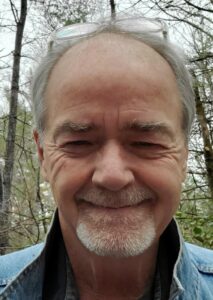
Richard P. Weigand writes on first principles, ethics, formation, logic, media, and cognitive immunity. His work explores how people think, how character is formed, and how modern systems shape belief and behavior. Explore more on the About and Books pages.
(C)Copyright 2026 All Right’s Reserved Richard P Weigand