When the Obvious Becomes Unspeakable: How Groups Learn Not to See What Everyone Knows
Table of Contents
Table of Contents
When the Obvious Becomes Unspeakable
The most dangerous truths are not always hidden.
Sometimes they are visible to everyone and spoken by no one.
A family knows the pattern.
A company knows the problem.
A school knows the failure.
An institution knows the lie.
A culture knows the mismatch.
But no one says it plainly.
The truth does not disappear. It simply becomes unspeakable. People learn to talk around it. They choose softer words. They discuss side issues. They argue over tone, timing, and procedure. They say the matter is complicated, sensitive, divisive, or unhelpful.
But underneath all the language, something remains.
Everyone knows.
And everyone knows they are not supposed to say it.
The Mismatch Is Seen Before It Is Named
Often, the first sign is a mismatch.
The words do not match the world.
The claim does not match the outcome.
The promise does not match the result.
The title does not match the function.
The authority does not match the evidence.
The compassionate language does not match the harm produced.
The official story does not match what people can plainly see.
At first, the mismatch may only create discomfort.
A person may not know how to explain it. He may not have all the facts. He may not be ready to challenge the public story. But something in him hesitates.
Something does not match.
That sentence matters.
It may be the first honest thought the person has had about the situation.
Groups Can Learn Not to See
Groups do not always deny reality directly.
Often, they train people not to notice it.
This training may be quiet.
A child learns which family subjects create tension.
An employee learns which questions end meetings badly.
A student learns which opinions are safe.
A citizen learns which observations invite labels.
A friend learns which truths cost belonging.
Over time, people become skilled.
They know where not to look.
They know what not to ask.
They know which words to use.
They know which facts to leave alone.
They know when to smile, nod, and move on.
The group may still claim openness.
But everyone understands the invisible boundary.
That boundary marks the place where the obvious becomes unspeakable.
Silence Becomes Agreement
Silence is not always agreement.
Sometimes silence is fear. Sometimes it is prudence. Sometimes it is exhaustion. Sometimes it is the result of not yet knowing what to say.
But in groups, silence often gets treated as agreement.
No one objects, so the story continues.
No one names the mismatch, so the mismatch is ignored.
No one challenges the phrase, so the phrase becomes normal.
No one questions the outcome, so the outcome is explained away.
This is how false agreement forms.
Not because everyone believes the public story.
Because everyone believes everyone else believes it.
So each person stays quiet.
The silence becomes a wall.
The Fear Beneath the Silence
People often remain silent because they understand the cost of speech before they understand the full truth.
They know what will happen if they say the obvious thing.
They may be called negative.
They may be called divisive.
They may be accused of lacking compassion.
They may be told they are oversimplifying.
They may lose standing in the group.
They may be treated as the problem.
This creates a strange reversal.
The person who names the mismatch becomes more offensive than the mismatch itself.
The one who says, “This does not match reality,” is blamed for disturbing the peace.
But the peace was already false.
It was the quiet agreement not to look.
The Language of Avoidance
When the obvious becomes unspeakable, language changes.
People do not say lie.
They say messaging problem.
They do not say failure.
They say challenge.
They do not say fear.
They say caution.
They do not say control.
They say safety.
They do not say conditioning.
They say education.
They do not say harm.
They say unintended consequence.
These words may not always be false. Sometimes softer language has a place. Not every failure is a moral crime. Not every mistake is a lie. Not every bad outcome was planned.
But avoidance language has a pattern.
It reduces clarity.
It protects the group from the full force of recognition.
It lets people discuss the situation without naming what the situation actually is.
The Fog Protects the Group
Once the obvious is covered in enough language, people can pretend the matter has been handled.
A committee is formed.
A statement is issued.
A process is reviewed.
A new phrase is adopted.
A concern is acknowledged.
A future improvement is promised.
But the central truth remains untouched.
The mismatch is still there.
The words still do not match the world.
This is why fog is so useful. It allows activity without recognition. It creates the appearance of seriousness while protecting the group from the one thing that would make repair possible: plain truth.
A group can become very busy avoiding what everyone knows.
“Everyone Knows” Is Not Enough
A truth privately known is not the same as a truth publicly named.
This is a hard but necessary point.
If everyone privately knows that something is wrong, but no one is willing to say it, the wrong thing keeps its power. Private recognition may comfort the conscience for a while, but it does not correct the condition.
The family pattern continues.
The business failure repeats.
The institution protects itself.
The cultural confusion deepens.
The child, worker, patient, citizen, or ordinary person living under the falsehood still pays the price.
“Everyone knows” may sound powerful.
But if no one speaks, the lie remains in charge.
The First Person to Speak
The first person to speak plainly often pays a price.
He breaks the agreement. He disturbs the room. He removes the group’s ability to pretend. He makes others responsible for what they had been avoiding.
This is why groups often react strongly.
They are not only reacting to what was said.
They are reacting to the loss of innocence.
Once the truth is spoken, everyone in the room knows that everyone heard it.
The old silence is no longer available in quite the same way.
This is the power of naming.
It changes the condition.
Speaking Plainly Does Not Mean Speaking Recklessly
There is a danger here.
Some people confuse plain speech with harshness. They think naming the obvious gives them permission to become careless, cruel, or proud.
That is not clear thinking.
Truth still needs judgment.
Timing matters.
Tone matters.
Evidence matters.
Responsibility matters.
The right words matter.
The goal is not to humiliate people.
The goal is to restore contact with reality.
A person can name the mismatch without becoming reckless. He can speak clearly without speaking viciously. He can refuse false language without losing mercy.
Plain speech is not brutality.
Plain speech is honesty with the fog removed.
The Tortoise Names the Mismatch
The hare runs past the unspeakable.
He knows the group is moving, and he moves with it. He feels the pressure and adjusts. He learns the approved phrases. He knows where not to pause.
The tortoise does something else.
He stops.
He looks at the ground.
He asks:
What does not match?
That question can change everything.
It is simple enough for anyone to understand. It does not require a theory. It does not require a credential. It does not require social permission.
It asks the mind to compare words with reality.
The tortoise may not know the whole answer yet. But he has found the beginning of clear thought.
He has noticed the mismatch.
Why the Obvious Feels Dangerous
The obvious becomes dangerous because it often threatens more than one conclusion.
It threatens identity.
It threatens reputation.
It threatens authority.
It threatens agreement.
It threatens the story people have used to understand themselves.
If the obvious thing is true, then people may have to admit they were wrong. They may have to admit they stayed silent. They may have to admit they defended what harmed them. They may have to admit that the authority they trusted did not deserve that trust.
That is a heavy burden.
So the obvious is kept at the edge of speech.
People sense it, but do not say it.
They live beside it.
They organize around it.
They build language to avoid it.
The Cost of Not Saying It
The cost of not saying the obvious is not always immediate.
At first, silence feels easier.
No conflict.
No disruption.
No difficult conversation.
No personal risk.
No need to stand apart.
But the cost grows.
The mismatch remains.
The wrong decision continues.
The harmful pattern deepens.
The false words become normal.
The people harmed by the silence remain harmed.
Avoidance always sends the bill somewhere.
If the truth is not spoken by those who see it, the cost is paid by those who live under the falsehood.
That is why silence is not always neutral.
Sometimes silence protects the problem.
When the Unspeakable Becomes Speakable Again
Repair begins when the unspeakable becomes speakable again.
Not through shouting.
Not through cruelty.
Not through public performance.
Through plain words.
“This does not match.”
“The outcome is not what was promised.”
“The word being used is hiding the reality.”
“The authority is not answering the evidence.”
“The group is protecting the story instead of the truth.”
Those sentences are simple.
But simple sentences can reopen reality.
They allow other people to admit what they have privately seen. They break the illusion that no one notices. They give the quiet sense of truth permission to become thought.
That is often how repair begins.
One person names what others have only carried silently.
The Minority That Can Speak
A culture does not need everyone to speak at once.
It may only need enough people who are willing to say what is.
Enough people who can pause.
Enough people who can define words.
Enough people who can notice outcomes.
Enough people who can say, “That does not match.”
Enough people who can resist the pressure to pretend.
This kind of minority can become powerful.
Not because it controls the system.
Because it breaks the spell.
Falsehood depends on people believing they are alone in seeing it. Once that belief breaks, many things become possible.
The Courage to Say What Is
The obvious becomes unspeakable when people fear the cost of recognition.
It becomes speakable again when enough people decide that reality matters more than comfort.
This does not mean every truth must be shouted.
It does not mean every private observation belongs in public.
It does not mean prudence should be abandoned.
But it does mean that a person should not spend his life pretending not to see what he sees.
The words must meet the world.
The claim must meet the outcome.
The language must meet the reality.
And when they do not, someone must be willing to say:
Something does not match.
That may be the beginning of trouble.
It may also be the beginning of freedom.
Because many falsehoods survive only until the obvious becomes speakable again.
—
Related Reading:
- The Tortoise Mind
- The Quiet Sense of Truth
- The Mercy of Not Looking
- What Is Truth?
- When Agreement Replaces Reality
- The Fog of Complexity
- Cognitive Immunity: Learning to Recognize Manipulation
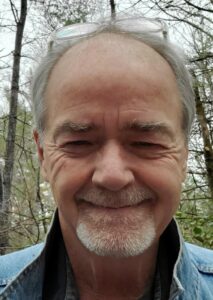
Richard P. Weigand writes on first principles, ethics, formation, logic, media, and cognitive immunity. His work explores how people think, how character is formed, and how modern systems shape belief and behavior. Explore more on the About and Books pages.
(C)Copyright 2026 All Right’s Reserved Richard P Weigand