I Am Not Saying Do Nothing
Table of Contents
Table of Contents
by Richard P. Weigand
I do not approach human distress from the premise that man is merely a body.
I do not believe suffering should automatically be translated into a disorder of the brain, a defect of chemistry, or a permanent psychiatric identity.
This does not mean I dismiss suffering.
It means I refuse to reduce the sufferer.
A person can become overwhelmed.
A person can become dangerous to himself or others.
A person can become confused, sleepless, terrified, broken down, or unable to function.
Those conditions must be addressed.
Actual danger must be handled.
Immediate harm must be prevented.
That is a social duty.
We owe that to one another.
But safety intervention is not the same thing as philosophical agreement with psychiatry.
To protect a person from harm is one thing.
To accept a lifelong psychiatric explanation of that person is another.
I do not accept that the label explains the person.
I do not accept that drug management is the same thing as healing.
And I do not accept that lifelong prescriptions prove the correct cause has been found.
They may suggest the opposite.
The symptom has been managed.
The person has not necessarily been healed.
The danger may have been quieted.
But the reason for the danger may remain.
That matters.
The Wrong Explanation Enters the Life
A wrong explanation does not stay on paper.
It enters the life.
The diagnosis changes the treatment.
The treatment changes the person.
The changed person is then used as evidence for the diagnosis.
Side effects become symptoms.
Agitation becomes disease.
Restlessness becomes proof.
The original wound disappears under a medical story.
That is not healing.
It is a system closing around a person.
This Is Not Blame
None of this means every condition is self-created in some crude or accusatory way.
A man can be struck.
He can be betrayed.
He can be lied to.
He can be robbed, injured, abandoned, targeted, or attacked.
Other causes exist.
Other people can do real harm.
But even then, the person must not be reduced to pure effect.
He still has his own point of causation to recover.
He can ask:
What did I miss?
What did I permit?
What warning did I fail to see?
What condition was I in?
What can I learn?
What can I repair?
What must I never allow again?
This is not blame.
It is the recovery of agency.
A victim explanation may be accurate as far as it goes.
But if it ends there, it can become a trap.
The person remains located at the injury.
Healing requires more.
It requires finding where one can again be cause.
Find the Real Cause
My position is simple:
Find the real cause.
Start with what happened.
Look at the body, yes, but do not stop there.
Look at sleep.
Look at fear.
Look at grief.
Look at humiliation.
Look at rejection.
Look at exhaustion.
Look at trauma.
Look at meaning.
Look at purpose.
Look at responsibility.
Look at relationship.
Look at spirit.
A psychotic condition must be handled as a psychotic condition.
Danger must be contained.
The person and others must be protected.
But the emergency is not the explanation.
The label is not the cause.
The drug is not the cure merely because it restrains the symptom.
Do Something Effective
I am not saying do nothing.
I am saying do something effective.
Protect the person.
Find the cause.
Handle danger without reducing the human being to the label.
Do not mistake control for healing.
Do not mistake management for cure.
Do not mistake a diagnosis for understanding.
And do not require me to lend moral or intellectual consent to a framework that begins from the wrong premise about man.
Suggested related reading section:
Hardship vs. Harm
The Consequences of a False Explanation
Who Controls the Line Between Normal and Sick?
Children Are Not Self-Forming
Formation Requires Intention
Human Distress Is Not Merely a Body Problem
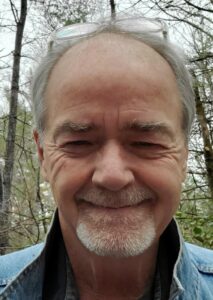
Richard P. Weigand writes on first principles, ethics, formation, logic, media, and cognitive immunity. His work explores how people think, how character is formed, and how modern systems shape belief and behavior. Explore more on the About and Books pages.
(C)Copyright 2026 All Right’s Reserved Richard P Weigand