Authority Does Not Create Truth: Why Expertise Must Answer to Reality
Table of Contents
Table of Contents
Authority Does Not Create Truth
Authority matters.
A child needs parents. A student needs teachers. A patient may need doctors. A citizen may need judges, laws, and institutions. A young craftsman needs masters. A society needs people who have studied, tested, remembered, preserved, and passed on what others have learned.
Without authority, every person would have to begin from nothing.
So the problem is not authority itself.
The problem begins when authority is treated as if it creates truth.
It does not.
Authority may point toward truth. It may guard truth. It may teach truth. It may help us test truth. But authority does not make something true by saying it.
Reality still has the final word.
Authority Is a Guide, Not the Ground
Good authority serves reality.
A good teacher does not say, “Believe me because I am the teacher.” He says, “Look here. Let me show you how this works.”
A good doctor does not merely say, “Trust me.” He examines the body, studies the signs, tests the data, and compares symptoms with known patterns.
A good judge does not invent facts. He weighs evidence.
A good scientist does not command reality. He observes it, tests it, and corrects his theory when the world refuses to match it.
Healthy authority points beyond itself.
It leads the mind toward the thing being examined.
Unhealthy authority points back to itself.
It says, “The matter is settled because we have settled it.”
That is where authority becomes dangerous.
The Words Must Still Meet the World
A statement does not become true because an expert says it.
A policy does not become wise because an institution approves it.
A theory does not become correct because a university teaches it.
A headline does not become accurate because a major outlet prints it.
A diagnosis does not become complete because it came from someone with letters after his name.
All of these sources may deserve attention. Some may deserve respect. Some may carry long experience and real knowledge.
But the words must still meet the world.
That is the first discipline.
Authority can help us examine reality.
It cannot replace reality.
Why People Want Authority to Create Truth
There is comfort in outsourcing judgment.
If an authority has already decided, the individual no longer has to carry the burden. He can repeat the official position. He can feel responsible while avoiding personal examination.
This is tempting.
Thinking takes effort. Looking carefully takes time. Standing apart from approved opinion can be costly. Trusting authority is easier, especially when the subject is complicated.
There is nothing wrong with relying on people who know more than we do.
The danger begins when reliance becomes surrender.
A person can listen to authority without handing over his ability to see.
The Relief of “Someone Else Knows”
Modern life is too large for any one person to verify everything.
No one can personally test every medicine, inspect every bridge, audit every financial system, study every law, examine every historical claim, or master every field.
So we need authority.
But needing authority creates vulnerability.
Because once people believe “someone else knows,” they may stop asking whether that someone is honest, competent, limited, pressured, mistaken, or captured by incentives.
The phrase “trust the experts” can be reasonable when it means, “Give weight to people with knowledge.”
It becomes dangerous when it means, “Stop examining.”
Good authority can withstand honest questions.
False authority resents them.
Credentials Are Not Reality
Credentials can represent real study.
They can also become symbols that replace thought.
A credential tells us that someone passed through a system. That may matter. It may indicate training, discipline, and exposure to a body of knowledge.
But a credential does not guarantee wisdom.
It does not guarantee courage.
It does not guarantee independence.
It does not guarantee that the person is asking the right question.
It does not guarantee that the person’s incentives are clean.
The credential may open the door to being heard.
It should not close the door to examination.
A person may have authority and still be wrong.
A person may lack authority and still notice what authority missed.
When Authority Becomes a Shield
Authority becomes corrupt when it is used to shield claims from reality.
Instead of answering the question, it attacks the questioner.
Instead of showing the evidence, it demands obedience.
Instead of correcting error, it protects reputation.
Instead of admitting uncertainty, it performs certainty.
Instead of saying, “Here is how we know,” it says, “Who are you to ask?”
That last question is often a confession.
It reveals that authority has moved from service to control.
When authority is honest, it does not fear being tested against reality.
When authority is false, it fears comparison.
The Crowd Around Authority
Authority rarely stands alone.
It often gathers a crowd around it.
Once an institution has spoken, others repeat the conclusion. Media amplifies it. Schools teach it. professionals adopt it. corporations comply. ordinary people absorb it. Eventually, the claim becomes socially protected.
At that point, disagreement does not merely challenge an idea.
It challenges the whole network of agreement built around the authority.
This is why people can become defensive on behalf of authorities they do not personally know and claims they have never personally examined.
They are not only defending the claim.
They are defending the comfort of belonging to the accepted world.
The Tortoise and Authority
The hare runs toward approved authority.
He wants to know what is safe to think. He wants the answer quickly. He wants the official position, the accepted phrase, the expert summary, the respectable conclusion.
Then he can move on.
The tortoise moves differently.
He does not reject authority automatically. That would be foolish. He listens. He learns. He gives weight to experience and study.
But he does not stop looking.
He asks:
What is the authority actually claiming?
What evidence supports it?
What is being assumed?
What is being left out?
What would prove the claim wrong?
Are outcomes matching the theory?
Is this authority serving truth or protecting itself?
Those questions do not destroy authority.
They purify it.
Real Authority Welcomes Reality
The best authorities are humble before reality.
They know that the world is larger than their theories. They know that evidence can correct them. They know that experience, outcomes, and honest observation matter.
A true expert does not need to pretend he knows everything.
He can say:
“We do not know yet.”
“The evidence is incomplete.”
“That conclusion was premature.”
“We were wrong.”
“This needs to be tested.”
That kind of humility strengthens authority.
It shows loyalty to truth over image.
False authority cannot do this easily. It must preserve the appearance of certainty because its power depends on being believed.
Authority and Responsibility
One of the reasons people submit too easily to authority is that it seems to remove responsibility.
If the authority is wrong, then the authority is to blame.
But life is not always that simple.
A person who sees something wrong and refuses to look further has made a choice. A person who repeats an official claim he has reason to doubt has made a choice. A person who uses authority to silence his own conscience has made a choice.
Authority may carry responsibility.
So does the one who obeys it blindly.
This does not mean every individual must become an expert in every subject.
It means no person should surrender his contact with reality.
When Authority and Reality Separate
The most dangerous moment comes when authority and reality separate.
The institution says one thing.
The outcomes say another.
The expert says the plan is working.
The results say it is failing.
The official report says the system is healthy.
The visible condition says it is not.
At that point, a person must decide which he will serve.
Authority or reality.
If he chooses authority against reality, he may remain socially safe for a while. He may be praised as responsible, informed, moderate, or reasonable.
But reality does not disappear.
It waits.
And eventually, the gap between official words and actual conditions becomes too large to hide.
Respect Without Surrender
The answer is not rebellion against all authority.
That is just another form of childishness.
A mature mind can respect authority without surrendering judgment. It can learn from experts without worshiping expertise. It can listen to institutions without pretending institutions cannot fail.
Respect is not blindness.
Trust is not obedience without examination.
Humility is not the abandonment of sight.
The mature person says, “I will listen carefully, but the words must still meet the world.”
That is the balance.
The First Principle of Authority
The first principle is simple:
Authority serves truth.
Truth does not serve authority.
When that order is kept, authority can be a blessing. It can guide, teach, protect, preserve, and correct. It can help people avoid foolishness and build upon the knowledge of those who came before.
But when the order is reversed, authority becomes a danger.
It begins to demand agreement instead of offering evidence.
It begins to protect itself instead of serving reality.
It begins to define truth by position rather than correspondence.
That is not authority in its proper form.
That is control.
Returning Authority to Its Place
Authority belongs in human life.
But it must remain under truth.
The teacher must answer to the subject.
The doctor must answer to the body.
The scientist must answer to the evidence.
The judge must answer to justice.
The journalist must answer to events.
The institution must answer to outcomes.
The leader must answer to reality.
Whenever authority refuses this order, the mind must pause.
Not react wildly.
Not reject everything.
Pause.
Look.
Ask whether the words still meet the world.
That pause is the beginning of cognitive immunity. It is the tortoise refusing to run simply because the crowd has been told where to go.
Authority can help us see.
But it must never be allowed to replace seeing.
Because authority does not create truth.
Truth is what authority must serve.
—
Related Reading:
- The Mercy of Not Looking
- What Is Truth?
- When Agreement Replaces Reality
- The Difference Between Reason and Rationalization
- Cognitive Immunity: Learning to Recognize Manipulation
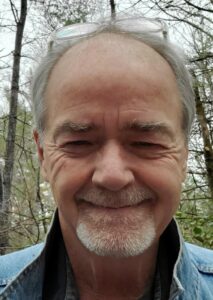
Richard P. Weigand writes on first principles, ethics, formation, logic, media, and cognitive immunity. His work explores how people think, how character is formed, and how modern systems shape belief and behavior. Explore more on the About and Books pages.
(C)Copyright 2026 All Right’s Reserved Richard P Weigand