Start Here.
A guide to the main article series, books, frameworks, and first-principles studies on RichardPWeigand.com.
View Site GuideView Manuscripts

Principles for Living Well.
Books on ethics, discipline, and character for individuals, families, and a culture in need of guideposts.
Browse Books
Culture Council
Why The Best Leaders Do Not Choose Sides—They Understand Polarity
Here are three ways leaders can keep polarity intact and make better decisions.
Culture Council
Good Art Has Never Been Safe: Creativity, Conflict, Power, and Polarity
A look at why meaningful creativity often emerges through tension, contradiction, and the responsible use of power.
Culture Council
What Leaders Lose When Work Becomes Invisible
Culture is the product of shared standards, exercised judgment and repeated exposure to consequence.
Culture Council
Why Leaders Should Stop Mistaking Familiar Ideas for Good Judgment
Because common sense is not always sense. Sometimes it is just repetition that has gone quiet.
Published Works
From the timeless code of Bushido to the foundations of everyday life.
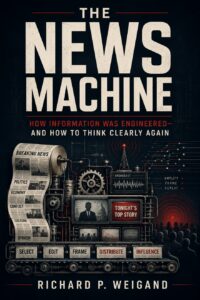
The News Machine
In The News Machine, Richard P. Weigand examines how modern information is shaped, framed, amplified, and repeated until it begins to feel like reality itself. This book is not just about bias in the media. It is about the deeper machinery underneath public belief: selection, repetition, emotional triggering, authority, language, and narrative control. We are […]
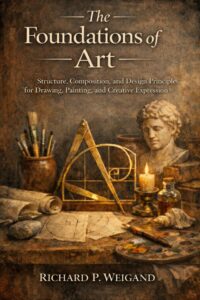
The Foundations Of Art
Art is often mistaken for instinct, but meaningful work is never made by impulse alone. Beneath beauty, expression, and originality are structures of balance, proportion, tension, material, and movement that give a work its force. This book examines the order that allows creativity to become clear, disciplined, and alive without reducing art to formula.

Grace’s Apprentice
Grace’s Apprentice helps girls ages 7–14 build character, confidence, emotional calm, resilience, and wise decision-making through guided exercises for parents, teachers, homeschool families, and mentors.
Latest Essays
Observations on modern institutions and culture.
Mentally Ill?
Fear Effects
Spotting Source: The Ability to See Where Things Come From
Executive Resources
Executive Manuscripts
Unique intellectual property available for leaders who want to own the narrative.
Moral Clarity
Restoring first principles that anchor families, institutions, and leadership.
Seeing the System
Looking past surface narratives to understand how institutions actually function.
A Path Forward
Frameworks for leaders prepared to act with discipline and moral restraint.
Executive Manuscripts
Unique intellectual property and strategic frameworks available for leadership partners.
Engineered Science
The public belief in medical research as objective, noble, and guided by truth.
The Unmaking of Innocence
A single idea is remaking childhood, medicine, and law, and almost nobody sees the machinery.
Engineered Education
School was engineered for compliance—this manuscript shows how to reclaim human learning.
“We cannot outsource our ethics to institutions that have forgotten their purpose. We must rebuild them, one leader and one family at a time.”
— Richard P. Weigand