What Is Freedom — Beyond the Thought
The Article
Freedom is usually defined in simple terms.
The ability to choose.
The absence of constraint.
The right to act without interference.
At this level, freedom appears clear.
If options are available, a person is free.
The discussion then focuses on:
- rights
- restrictions
- external control
Am I being prevented from doing what I want?
This seems like the right question.
But it begins after something more fundamental has already been shaped.
Freedom Does Not Begin with Choice
Before a person chooses, something else is already in place.
Their sense of:
- what is desirable
- what is possible
- what is worth choosing
These are not created in the moment.
They are formed over time—through education, environment, repetition, and experience.
So while the act of choosing may be free,
the field of choices may not be.
The Structure Beneath Freedom
At a deeper level, freedom rests on three conditions:
- Awareness — What a person is able to see and consider
- Capacity — What a person is able to do
- Formation — What a person is inclined to choose
Without awareness, options are invisible.
Without capacity, options are unreachable.
Without examining formation, choices may feel free—but follow a pattern already set.
Freedom as Constraint and Structure
We often think of freedom as the removal of structure.
But at a first-principles level, freedom depends on the right kind of structure.
A person without discipline is not more free.
They are more easily directed.
A person without clarity is not more independent.
They are more easily influenced.
So freedom is not simply the absence of constraint.
It is the presence of structure that allows a person to act deliberately.
What Is Rarely Seen
Most people ask:
“Am I free to choose?”
A more fundamental question is:
“Where did my choices come from?”
That question leads beneath the act of decision
to the formation that shaped the decision-maker.
Freedom and Formation
Formation creates patterns.
Over time, these patterns:
- feel natural
- feel right
- feel like personal preference
But they may not have been consciously chosen.
To examine formation is not to reject it.
It is to see it clearly.
Only then can it be accepted—or changed.
Freedom and Media
Media shapes awareness.
It determines:
- what is visible
- what is discussed
- what feels normal
If awareness is limited,
freedom is limited—regardless of available choices.
Freedom and Authority
Authority defines legitimacy.
It influences:
- what is considered acceptable
- what is considered reasonable
- what is considered possible
These definitions shape the range within which freedom operates.
The Boundary of Choice
Every system creates a boundary.
Inside that boundary:
- choices exist
- preferences are expressed
- decisions are made
Outside it:
- possibilities may exist
- but they are rarely seen or considered
To move beyond the thought is to examine that boundary.
Not just what you can choose—
but what you are able to imagine choosing.
Why This Matters
If freedom is understood only as choice,
then the goal is to increase options.
If freedom is understood at the level of structure,
then the question changes.
- What shapes my awareness?
- What has formed my preferences?
- What limits my ability to see alternatives?
Beyond the Thought
To move beyond freedom as it is commonly understood
is to see that choice alone does not guarantee independence.
Freedom requires:
- awareness of what is unseen
- understanding of what has shaped you
- the ability to act beyond that shaping
Closing
Freedom is not simply the ability to choose.
It is the ability to see clearly,
to understand what has shaped you,
and to act with intention.
Anything less may feel like freedom.
But it remains within the boundaries already set.
—
Related Reading
- What Is Formation — Beyond the Thought
- What Is Authority — Beyond the Thought
- What Is Media — Beyond the Thought
- Structure Before Freedom
- First Principles — Beyond the Thought
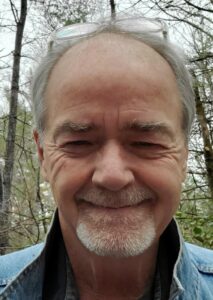
Richard P. Weigand writes on first principles, ethics, formation, logic, media, and cognitive immunity. His work explores how people think, how character is formed, and how modern systems shape belief and behavior. Explore more on the About and Books pages.
(C)Copyright 2026 All Right’s Reserved Richard P Weigand