What Is Control — Beyond the Thought
The Article
Control is usually understood in visible terms.
Rules are imposed.
Actions are restricted.
Consequences are enforced.
At this level, control appears direct.
Something is prevented, and we recognize it as such.
The discussion then focuses on:
- power
- authority
- limitation
Who is in control?
What are they preventing?
These are important questions.
But they begin after something more fundamental has already taken place.
Control Does Not Begin with Force
By the time force is visible, control has already failed or become obvious.
At a deeper level, control operates before resistance is necessary.
It shapes:
- what is seen
- what is believed
- what is considered possible
When these are established, behavior follows naturally.
Not because it is forced,
but because it feels reasonable.
The Structure Beneath Control
Control, at its deepest level, rests on the same conditions you’ve seen throughout this series:
- Education — forming the framework early
- Media — shaping what is visible and repeated
- Narrative — assigning meaning to events
- Authority — defining what is legitimate
- Formation — shaping patterns of thought and behavior
Together, these create an environment.
Within that environment, outcomes emerge with little need for direct intervention.
Control as Environment
We often look for control in commands.
But at a first-principles level, control is more effective as environment.
An environment determines:
- what feels normal
- what feels acceptable
- what feels true
Within such an environment, people act freely—
but within a structure that guides those actions.
What Is Rarely Seen
Most people ask:
“Who is controlling this?”
A more fundamental question is:
“What conditions make this outcome likely?”
That question leads away from individuals
and toward structure.
Control Without Appearance
The most stable forms of control do not appear as control.
They do not rely on constant enforcement.
They rely on:
- familiarity
- repetition
- shared assumptions
When these are in place, control becomes self-sustaining.
People:
- reinforce what they have learned
- repeat what they have seen
- defend what feels true
Not because they are forced,
but because it aligns with what has already been formed.
Control and Freedom
Control and freedom are often presented as opposites.
In practice, they can coexist.
A person may feel free to choose,
while operating within a structure that shapes those choices.
This is not always intentional.
But it is always possible.
The Boundary of Control
Every system establishes boundaries.
Inside those boundaries:
- variation exists
- disagreement occurs
- choices are made
Outside them:
- alternatives may exist
- but they are rarely seen or pursued
To move beyond the thought is to examine those boundaries.
Not just what is controlled—
but how control is established in the first place.
Why This Matters
If control is understood only as force,
then the response is to resist restriction.
If control is understood at the level of structure,
then the question changes.
- What has shaped the environment I operate within?
- What patterns feel natural—and why?
- What lies outside the boundaries I take for granted?
Beyond the Thought
To move beyond control as it is commonly understood
is to see that influence does not require visible force.
It requires the shaping of conditions.
Once those conditions are set,
outcomes follow with little resistance.
Closing
Control is not simply the restriction of action.
It is the shaping of the environment in which action takes place.
To see that
is to begin recognizing where control is visible—
and where it is not.
Related Reading:
- What Is Freedom — Beyond the Thought
- What Is Formation — Beyond the Thought
- What Is Media — Beyond the Thought
- What Is Authority — Beyond the Thought
- First Principles — Beyond the Thought
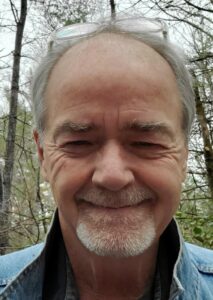
Richard P. Weigand writes on first principles, ethics, formation, logic, media, and cognitive immunity. His work explores how people think, how character is formed, and how modern systems shape belief and behavior. Explore more on the About and Books pages.
(C)Copyright 2026 All Right’s Reserved Richard P Weigand