What Actually Forms Character?
Table of Contents
Table of Contents
Article
Introduction
If education is meant to shape the person, then one question sits at the center:
What actually forms character?
Not what describes it.
Not what recommends it.
But what produces it.
Because character is not an idea.
It is something a person becomes.
Character Is Formed, Not Taught
A person can be taught what honesty is.
That does not make them honest.
They can explain courage.
They can define responsibility.
But when the moment comes—when telling the truth carries a cost, or when standing firm brings pressure—knowledge alone does not decide the outcome.
Something else does.
Character is formed through repeated action under real conditions.
The Role of Structure
Character develops within structure.
Structure provides:
- expectations
- boundaries
- consequences
Without structure, behavior becomes optional.
With structure, behavior becomes patterned.
Over time, patterns become habits.
And habits become character.
Remove structure, and formation weakens.
Not immediately—but steadily.
The Necessity of Friction
Character does not form in comfort.
It forms in resistance.
- telling the truth when it would be easier not to
- finishing what was started when motivation fades
- restraining impulses when no one is watching
These are not theoretical exercises.
They are points of friction.
And friction is where formation happens.
A system that removes all difficulty may reduce stress.
It also reduces growth.
Responsibility Before Recognition
Character grows when responsibility is required—not when it is rewarded.
A person who is consistently:
- relied upon
- held accountable
- expected to follow through
begins to internalize those expectations.
They become the kind of person who carries weight.
Recognition may follow.
But it is not the cause.
Consistency Over Intensity
Character is not built in moments of inspiration.
It is built in repetition.
- showing up
- doing the work
- holding the line
again and again.
Small actions, repeated over time, shape the person more than occasional effort.
This is slow.
But it is reliable.
The Role of Belief
At some point, formation reaches a limit.
A person can follow rules.
They can meet expectations.
But when the cost rises—when doing the right thing brings loss, isolation, or discomfort—something deeper is required.
A belief that:
- truth matters
- duty matters
- right action matters
even when it is not rewarded.
Without that, behavior often adjusts to circumstances.
With it, a person holds steady.
What Weakens Character Formation
Several patterns consistently undermine formation:
- removing consequences
- avoiding discomfort
- replacing expectations with preferences
- rewarding appearance over action
- speaking about virtue without requiring it
These do not destroy character immediately.
They make it less likely to form.
What Strengthens It
Character forms where there is:
- clear expectation
- consistent accountability
- meaningful responsibility
- real consequence
- opportunity to act under pressure
These are not abstract ideals.
They are conditions.
Where they exist, character tends to develop.
Where they do not, it tends not to.
A Simple Test
You can recognize character by what a person does when:
- no one is watching
- the cost is high
- the pressure is real
If the behavior holds, character is present.
If it shifts, it is still forming.
Closing Thought
Character is not produced by language alone.
It is formed by the conditions a person lives within—and the standards they are held to over time.
Any system that seeks to develop strong individuals must answer a simple question:
Does it create those conditions—or avoid them?
Related Reading
- Can Moral Education Exist Without Religion?
- What Replaced Religion in Education?
- What Is Responsibility — Really?
- The Silent Shift in American Education
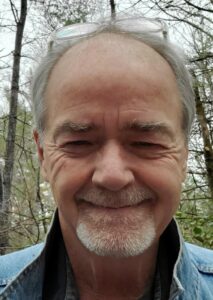
Richard P. Weigand writes on first principles, ethics, formation, logic, media, and cognitive immunity. His work explores how people think, how character is formed, and how modern systems shape belief and behavior. Explore more on the About and Books pages.
(C)Copyright 2026 All Right’s Reserved Richard P Weigand