The Forgotten Center of the Person—and the Civilization
What Is the Soul?
The Forgotten Center of the Person—and the Civilization
“You don’t have a soul. You are a soul. You have a body.”
— C. S. Lewis (attributed)
“The soul takes nothing with her to the next world but her education and her upbringing.”
— Plato
We speak of the soul as if it were poetry, metaphor, or religion.
But the soul is more than symbol.
It is substance.
The soul is the center of a human being—
not made of matter, but no less real.
It is the seat of conscience, memory, will, and longing.
It is what makes you you, even as your body changes,
even as your thoughts shift.
- It is the part of you that:
- aches for meaning
- recognizes beauty
- grieves evil
- seeks the good
—even when no one is watching.
The soul cannot be scanned or weighed.
And yet every great civilization before ours knew it was there.
Not as superstition.
As a first principle.
The Soul Is Not Religious—It Is Human
You do not need a specific religion to recognize that something lives at the center of a person that is not material.
We say:
- She has an old soul
- He poured his soul into it
- Their music had no soul
- His soul is broken
These are not accidents of language.
They are remnants of a truth we still recognize:
We are not just bodies.
We are not just minds.
We are souls—with bodies and minds.
When a person loses touch with the soul, something changes.
They become:
- reactive
- unanchored
- easily shaped by the moment
- They lose contact with anything permanent.
When a culture denies the soul, the effect multiplies.
It becomes mechanical.
Hollow.
Driven by stimulus.
And increasingly incapable of love.
A Civilization Has a Soul, Too
Just as a person has a center, so does a civilization.
Not in its buildings or laws—
but in its shared moral imagination.
A civilization’s soul is found in:
- what it honors
- what it mourns
- what it protects
- what it passes on
It lives in:
- its stories
- its virtues
- its taboos
- its symbols
- its willingness to suffer for truth
When that soul is alive:
- people live with purpose
- they sacrifice for one another
- they raise children with hope
- they remember their dead with reverence
When the soul weakens, the structure remains—for a time.
Then it begins to fail.
- institutions lose integrity
- language loses meaning
- families fracture
- people forget who they are
The Soul and the Moral Order
The soul is what recognizes good and evil
even when no authority speaks.
It is what recoils at cruelty.
What moves us to forgive.
What drives us to create what is beautiful.
Without the soul, the moral order does not disappear at once.
It erodes.
Not because no one is in charge—
but because no one remembers why anything matters.
A world that denies the soul does not become more scientific.
It becomes more brutal.
It does not become freer.
It becomes easier to control.
Soul Loss in the Modern Age
The modern world denies the soul in different ways:
In science, we are reduced to biology
In medicine, we are treated as systems to regulate
In education, we are shaped as containers to fill
In media, we are reduced to attention and reaction
In government, we are managed as units
This denial is not neutral.
It has consequences.
When the soul is denied:
- responsibility weakens
- meaning collapses
- freedom becomes unstable
This is not collapse as spectacle.
It is collapse at the center.
And no civilization survives that for long.
To Begin Again
If anything is to be restored, it begins here.
With the soul.
We must speak of it again.
Not as metaphor—
but as reality.
We must teach:
- the dignity of conscience
- the weight of choice
- the reality of good and evil
- the possibility of truth
We must teach children:
- that they are more than their bodies
that they are not accidents
that they carry both weight and worth
And we must remember—quietly, personally—
that even now:
the soul remains.
It can be wounded.
But not destroyed.
Buried.
But not extinguished.
And in remembering the soul,
we remember ourselves.
Not as data.
Not as factions.
But as human beings—
still capable of clarity,
still capable of courage,
still capable of becoming whole.
—
Understanding the soul is not only something to define.
It is something to recognize.
What follows is not an argument, but a reflection.
The Restoration Begins
(A Reflection on the Soul and Civilization)
If Western civilization is to continue,
it must first desire to continue.
And if it is to be restored,
it must begin
not in systems or slogans—
but in the soul.
We have spent generations
dismantling the foundations:
Truth was made relative.
Virtue was called oppressive.
Family was deconstructed.
Freedom was confused with desire.
And the soul was denied altogether.
We replaced
reverence with consumption,
discipline with indulgence,
sacrifice with comfort,
and meaning with distraction.
And yet—
in every broken thing,
there is still a seed.
The restoration will not be announced.
It will not be televised or funded.
It will not begin
in Washington,
or Silicon Valley,
or Geneva.
It will begin quietly—
in the hearts of those
who remember what was good.
In a mother
who teaches her child
that right and wrong still exists.
In a father
who restrains himself out of love.
In a teacher
who dares to speak truth.
In a craftsman
who takes pride in his work.
In a young person
who rejects the noise
and chooses stillness.
Each act of virtue.
Each refusal to lie.
Each child raised with honor.
Each soul reclaimed—
is part of the rebuilding.
The West will not be restored
by going backward—
but by recovering
what was eternal
in what we left behind.
This is not about politics or religion.
It is about becoming human again.
About remembering
that man is not a machine,
not a statistic,
not a bundle of identities—
but a soul,
called to live in truth.
You may feel small.
But all civilizations
begin and end in people.
And every act
of courage,
of conscience,
of clarity—
is a brick
laid against the ruin.
The restoration has already begun.
In you.
—
Author’s note: the soul is the most basic first principle. If that is true—and it likely is— then this article becomes more than a piece.
It becomes: the entry point to begin to understand the system in total.
Related Reading
link to first principle
link to Cognitive Immunity
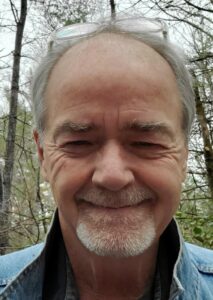
Richard P. Weigand writes on first principles, ethics, formation, logic, media, and cognitive immunity. His work explores how people think, how character is formed, and how modern systems shape belief and behavior. Explore more on the About and Books pages.
(C)Copyright 2026 All Right’s Reserved Richard P Weigand